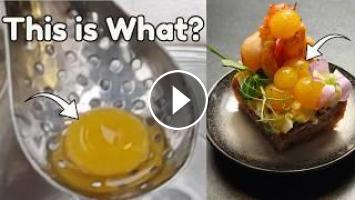
Learn how to make beautiful mango caviar using reverse spherification in this detailed, step-by-step molecular gastronomy tutorial.
In this video, I show you how to prepare the mango mixture, achieve the correct consistency, make the sodium alginate bath, avoid common beginner mistakes, and form delicate mango caviar with a thin membrane and liquid centre.
One of the most important steps is allowing the sodium alginate bath to rest for at least eight hours, or preferably overnight, so the air bubbles disappear and the mixture becomes translucent.
You will also learn:
• Why you should not start forming the caviar immediately after blending
• How to adjust the water according to the thickness of the mango purée
• Why bottled water is useful for the alginate bath
• How to avoid making the membrane too thick
• Why beginners should be careful when adding lemon juice
• How to achieve better sealing and more consistent spheres
For the sodium alginate bath, the standard ratio is approximately 5 grams per litre of water. In this tutorial, I use 7 grams per litre because it gives me the result I prefer.
SHOP MY RECOMMENDED KITCHEN TOOLS:
Amazon affiliate link:
amazon.com/shop/klavertjevier.kuurne
Some of the links in this description may be affiliate links. As an Amazon Associate, I earn from qualifying purchases at no additional cost to you.
Please remember that results can vary depending on the thickness, acidity and calcium content of your ingredients.
Have a question about the recipe? Leave it in the comments below, and I will be happy to help.
Please like, subscribe and turn on notifications for more modern gastronomy tutorials, restaurant techniques and recipes made from scratch.
#MangoCaviar #ReverseSpherification #MolecularGastronomy #ModernGastronomy #Spherification #ChefTechniques #FoodScience
✨ Watch more from my kitchen:
- Категория
- Кухня без ошибок — советы

Комментариев нет.
Следующее
Auto
-
01:00

Easy Chicken Curry for Beginners | Step-by-Step Recipe
-
00:34
Homemade Rose Milk Cake | Step-by-Step Recipe
-
02:17
Quick BISTEC Dinner Step by Step #cooking #recipe #reels
-
13:30
Old Fashioned Southern Yorkshire Pudding – Oma’s Best Recipes – Easy Step-by-Step Instructions
-
01:01
How to Make the Perfect Homemade Pizza | Easy Step-by-Step Recipe
-
00:13
National Caviar Day with Merolin Caviar July 18, 2026
-
01:43
BEST Veg Burger Recipe You'll Ever Make (Restaurant-Style-Crispy Patty Secret Revealed) Step-by-Step
-
05:58
Karachi Street Food Recipe Ep.1 / Anday Wala Burger Step by Step Recipe
-
01:15
How to make Pan Seared Salmon with mashed potatoes step by step #foodshorts #foodstoriesgh
-
00:25
Mango Delight is mouthwatering ♥️| No Bake Mango Cake #shorts #mango #cake #dessert #viral #food #yt
-
00:32
Самый вкусный #хлеб #рецепты дома!
-
07:45
5 ВКУСНЯШЕК В МИКРОВОЛНОВКЕ! БЫСТРЫЕ и НЕВЕРОЯТНО ВКУСНЫЕ рецепты
-
01:31
Пол часа и ужин на столе / РЕЦЕПТ
-
00:12
Когда лень готовить #рецепты #ужин #фудблог #готовка #еда
-
00:39
Настоящий рецепт сборной солянки! #солянка #быстрыерецепты #вкусноибыстро #быстрыйужин
-
00:20
Ужин после работы за 30 минут | Сочное куриное филе в духовке
-
00:13
ЯИЧНИЦА В ЛАВАШЕ! Завтрак в лаваше ! Быстрый завтрак ! Завтрак за 5 минут
-
00:30
Если есть дома тыква - надо готовить это! Прекрасный полезный и очень вкусный завтрак!
-
00:56

Новый Рецепт ВКУСНЕЕ КОТЛЕТ#люлякебаб #кебаб #мясноеблюдо #рецепт #рецепты #вкусно #еда #готовимдома
-
16:30
20 ИДЕЙ ИЗ ФАРША для тех, кому некогда долго готовить!